


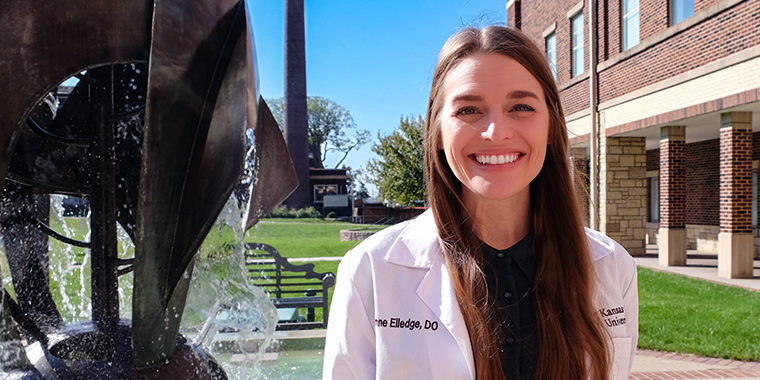
KCU alum Dianne Elledge, DO, MA, DABOM, loved her years as a bioethics and medical student at Kansas City University (KCU). Now she is excited to make the jump from outpatient family medicine clinics to a KCU classroom as assistant professor of Primary Care. The jump also includes community clinics and opportunities at Samuel U. Rodgers Health Center in Kansas City, where KCU has a historic relationship impacting community health.
A course called Diversity, Culture and Bioethics triggered Elledge’s interest in weight stigma, weight bias and the challenges individuals with obesity face in the health care system. After earning her master’s in bioethics and Doctor of Osteopathic Medicine from KCU, she worked in family medicine in Austin, Texas, eventually earning DABOM status (Diplomate of the American Board of Obesity Medicine). The opportunity to incorporate nutrition and complementary topics in physician education as well as provide frontline patient care has drawn Elledge back to KCU.
“I think we attract students who are interested in the whole-person approach to medicine because that is what is at the core of osteopathic medicine--treating body, mind and spirit, and addressing root causes,” says Elledge. “My perspective of primary care includes nutrition, lifestyle and stressors. For example, how much sleep is someone getting? We know that social determinants of health ultimately matter. They are one of the most important factors for chronic diseases like Type 2 diabetes, hypertension, cardiovascular disease and obesity. It's vital to work with a patient on all those nonmedication issues.”
With Elledge on staff, KCU is intentionally integrating nutrition and lifestyle considerations into students’ learning. The curriculum innovations precisely align with an initiative of the U.S. Department of Health and Human Services (HHS) and the Department of Education. KCU is one of more than 50 medical schools nationwide that have voluntarily committed to incorporating 40 hours of nutrition education or competency equivalents for students starting this fall.
There are a host of ways to demonstrate the accomplishment. The goal is enhancing learning, not adding 40 hours to an already-packed curriculum or bumping foundational coursework, Elledge observes. “We can readily meet our goals via a mix of classroom coursework and labs, outside lectures and community outreach, for example.”
“We have to meet patients where they are,” she says. “Losing weight is not necessarily the immediate target for promoting good health. There are people with overweight or obesity, who already have many healthy habits and their labs look great, but there are other factors that you must evaluate, too.”
Case in point: at Sam Rodgers, Elledge will promote primary care that embraces all aspects of a person’s well-being. In addition to nutrition, that includes a patient’s history, lifestyle, social network and more. “This is core to primary care."
Such a whole-person approach to physician education, patient care and wellness is fundamental to the philosophy of osteopathic medicine. At KCU, we’re training physicians to change health care for good.


(0) Comments